Horse Counts
Government of Alberta
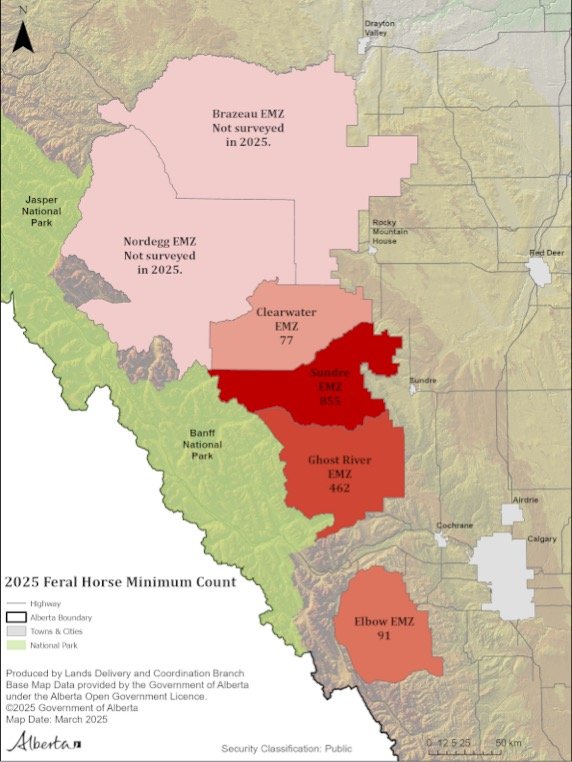
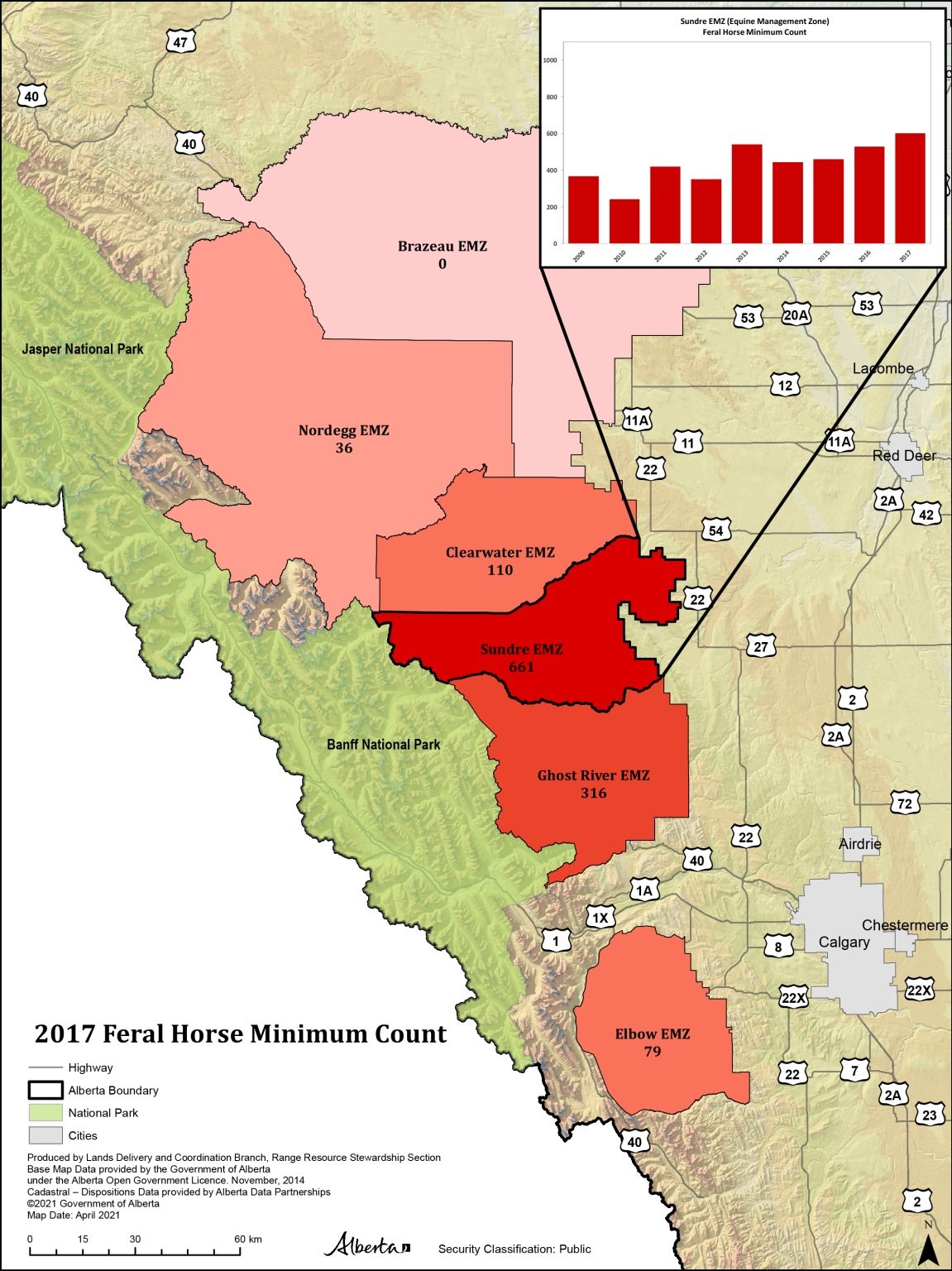
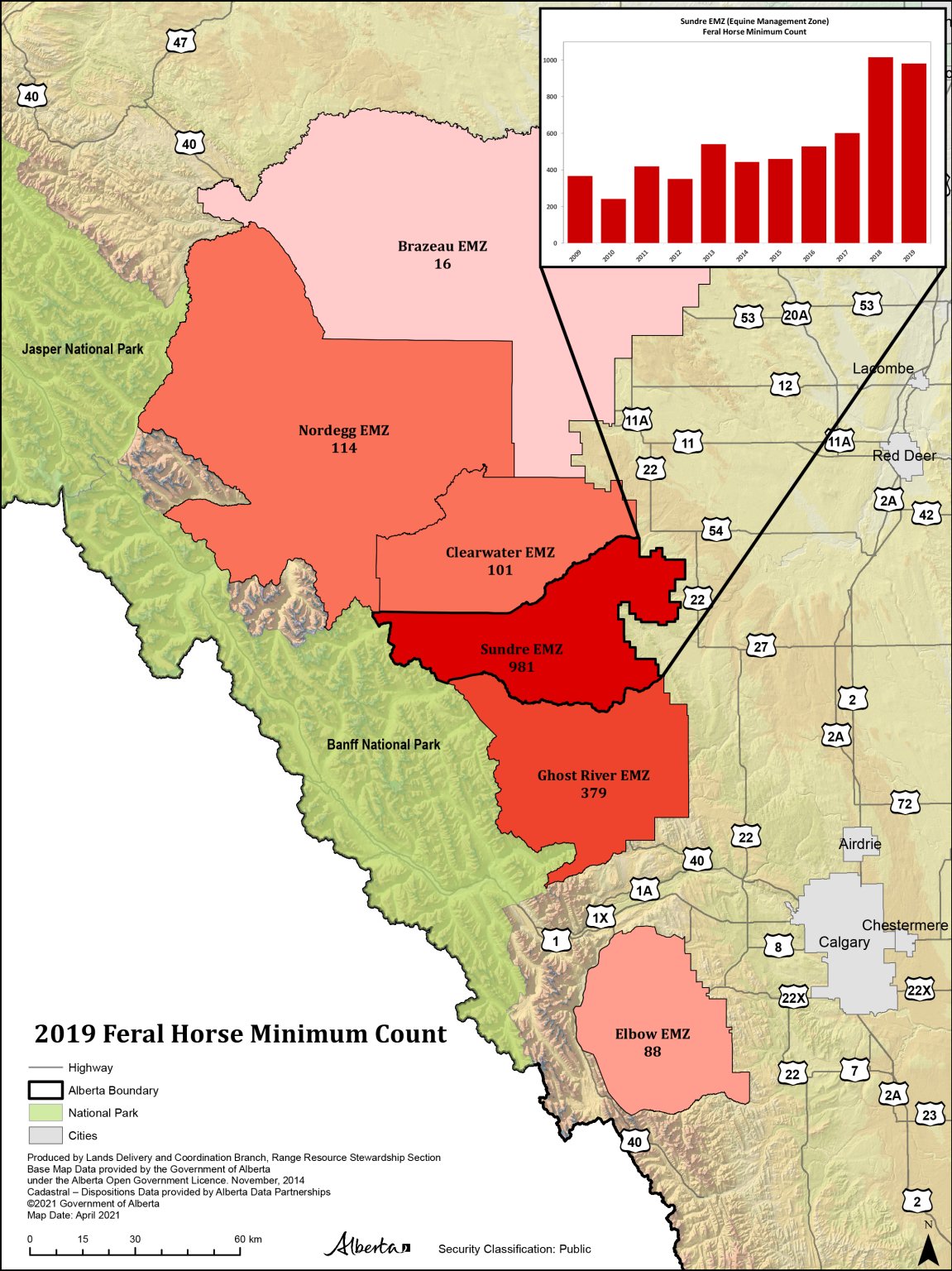
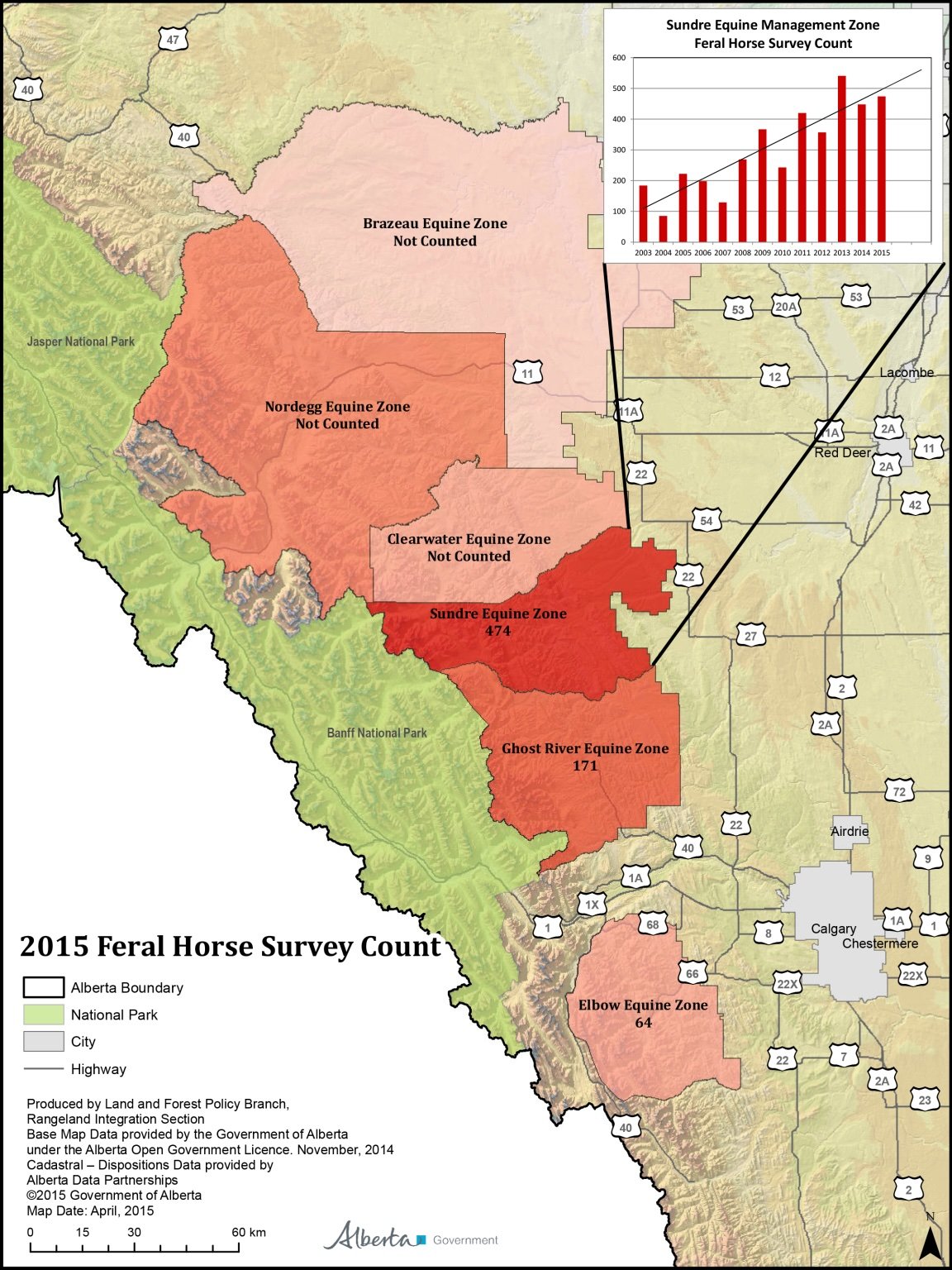
The Government of Alberta manages the free-roaming Alberta Mountain Horses within six Equine Management Zones (EMZs) along the eastern slopes of the Canadian Rocky Mountains:
Brazeau
Nordegg
Clearwater
Sundre
Ghost River, and
Elbow.
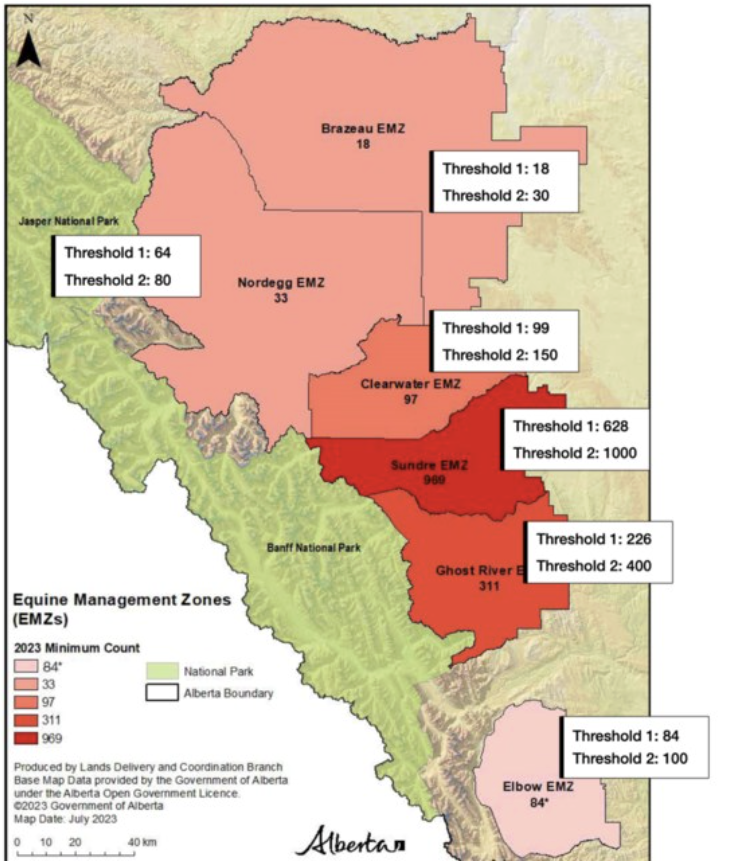
Alberta’s 2023 Feral Horse Management Framework sets population thresholds for each zone. The Framework proposes three population tiers for each EMZ, with 2 thresholds between the tiers:
Tier 1 (sustainable - green)
Tier 2 (concern - yellow)
Tier 3 (unsustainable - red)
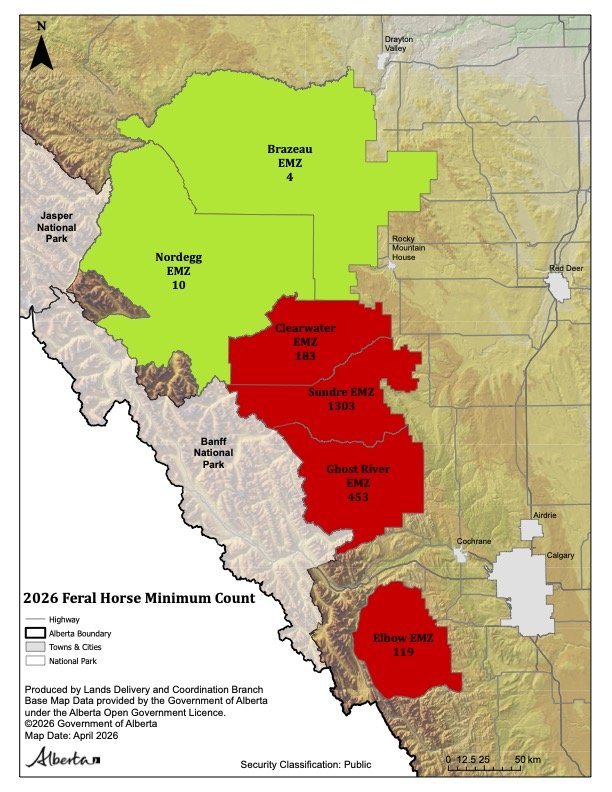
The first threshold triggers measures including adoption and use of contraception to bring the population back down to the first tier. When the 2nd threshold trigger is reached, this is considered the maximum cap, and population reduction measures are put into place that include sale at auctions, adoption, or, as a last resort, euthanasia.
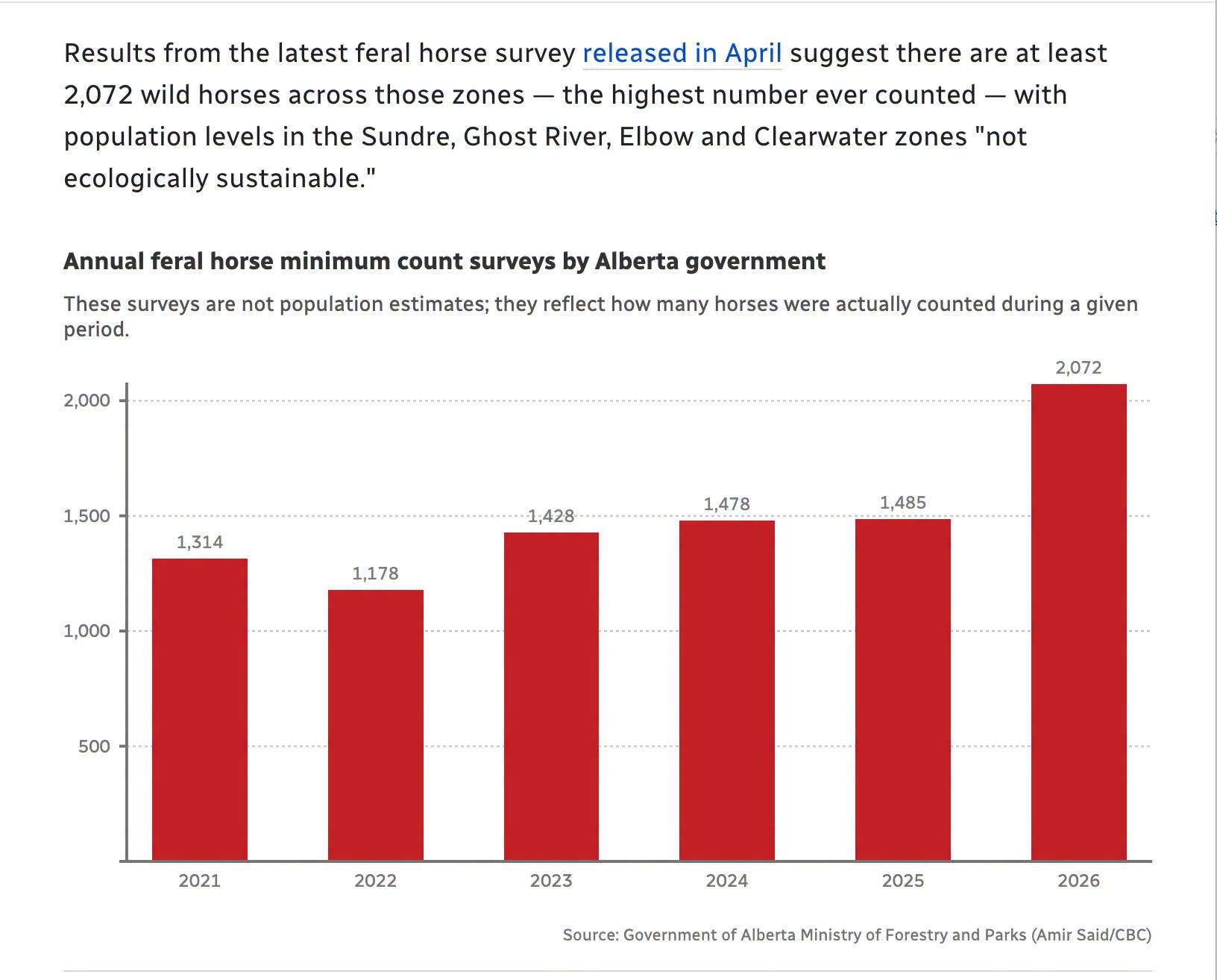
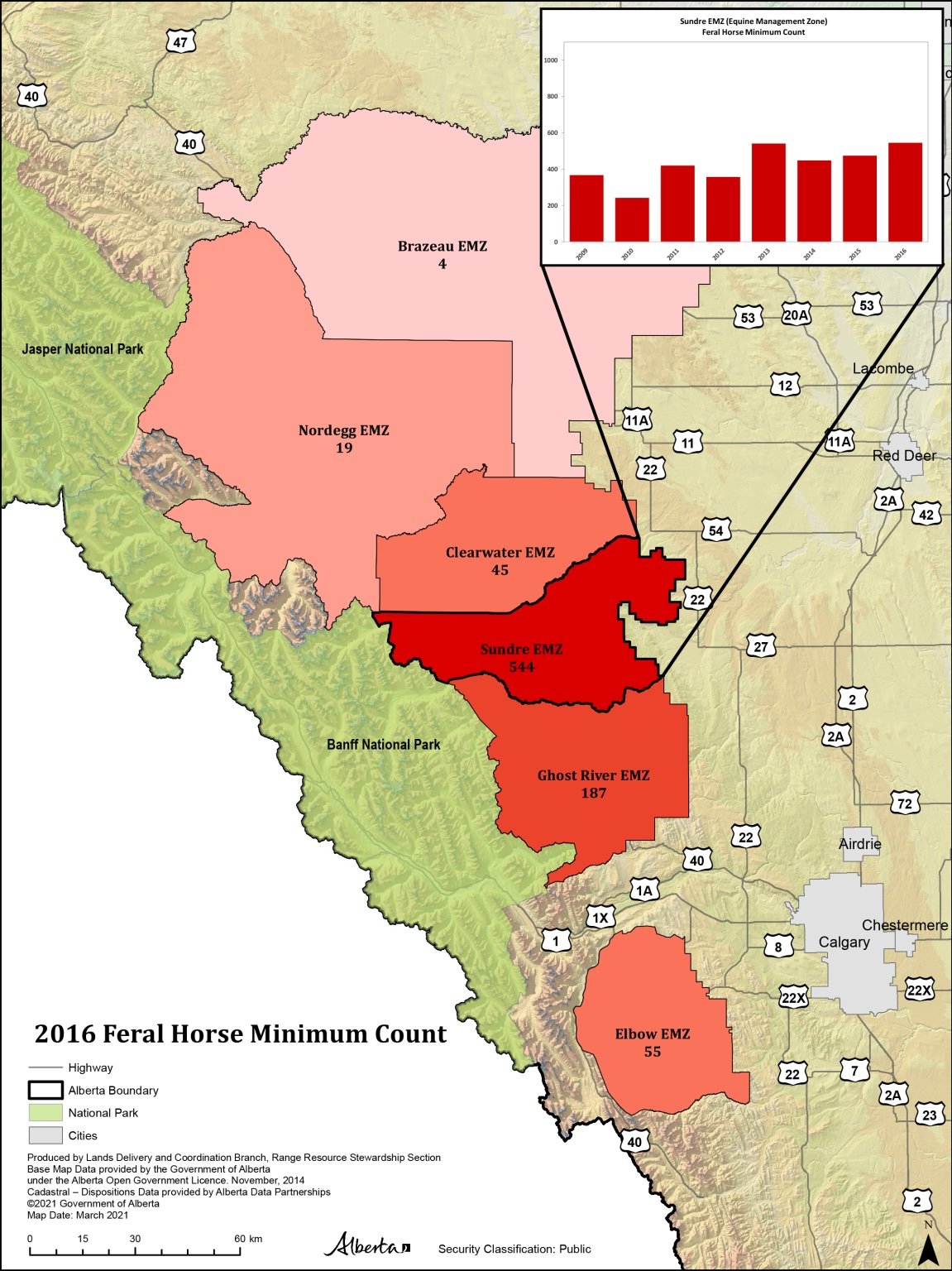
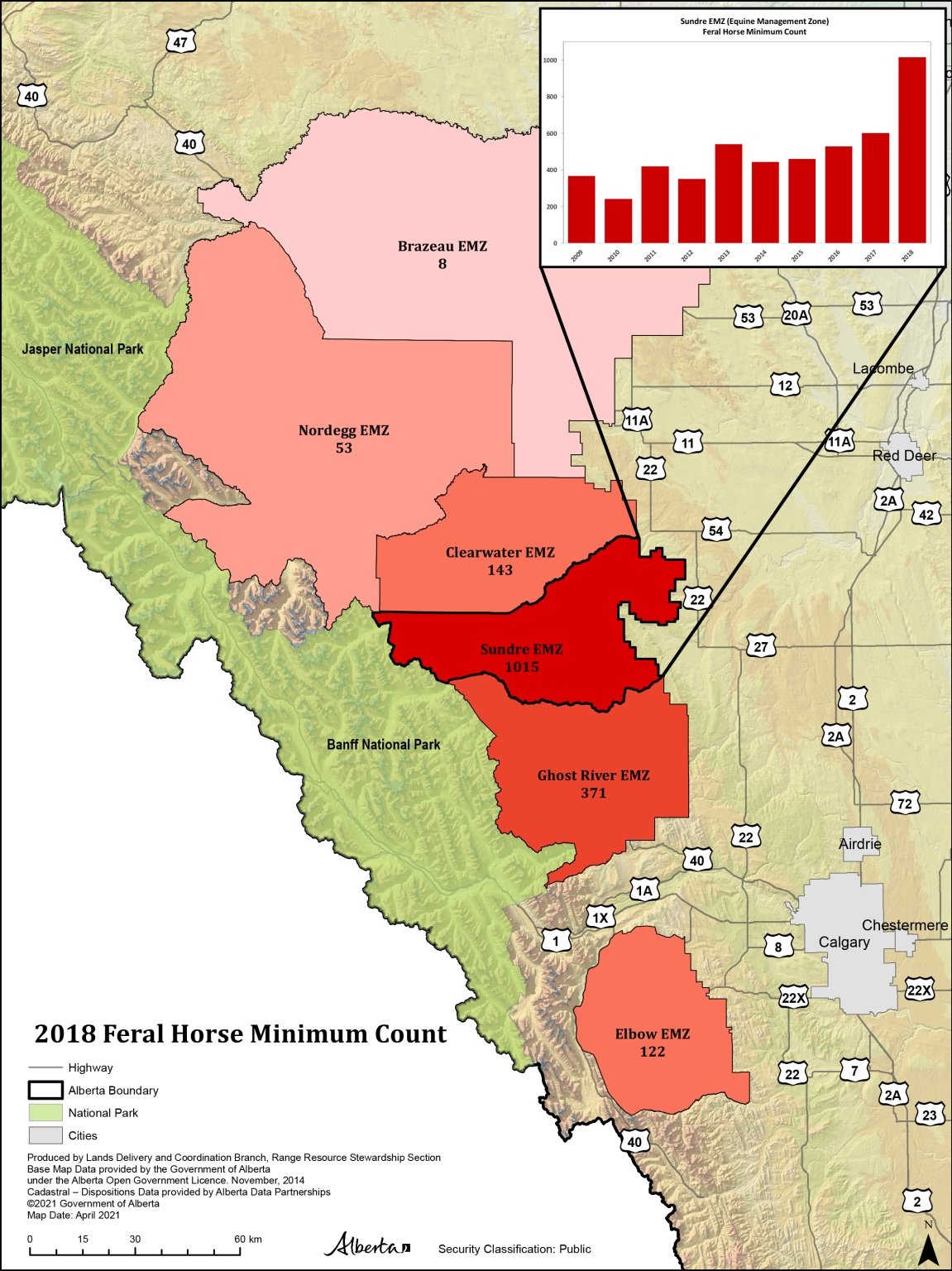
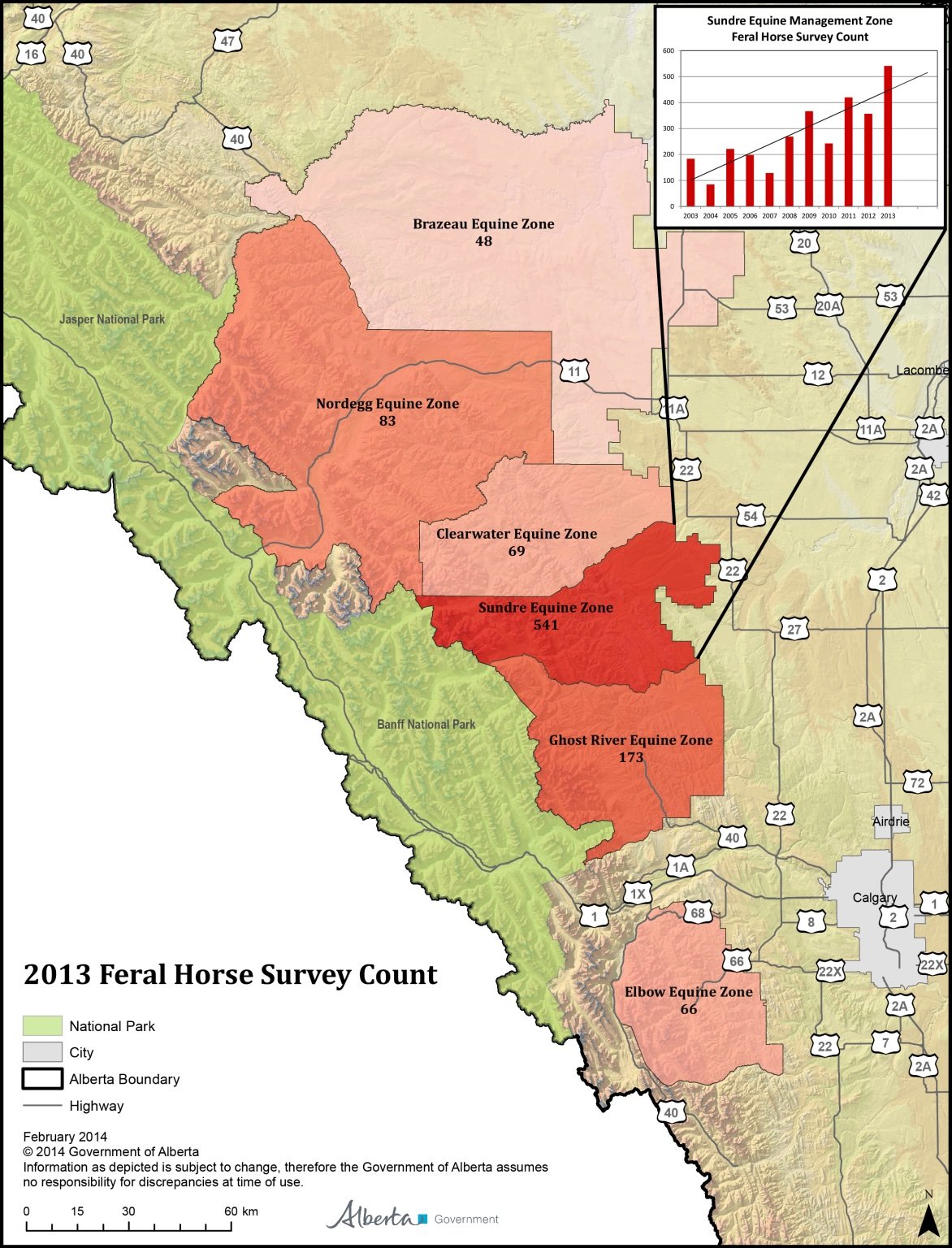
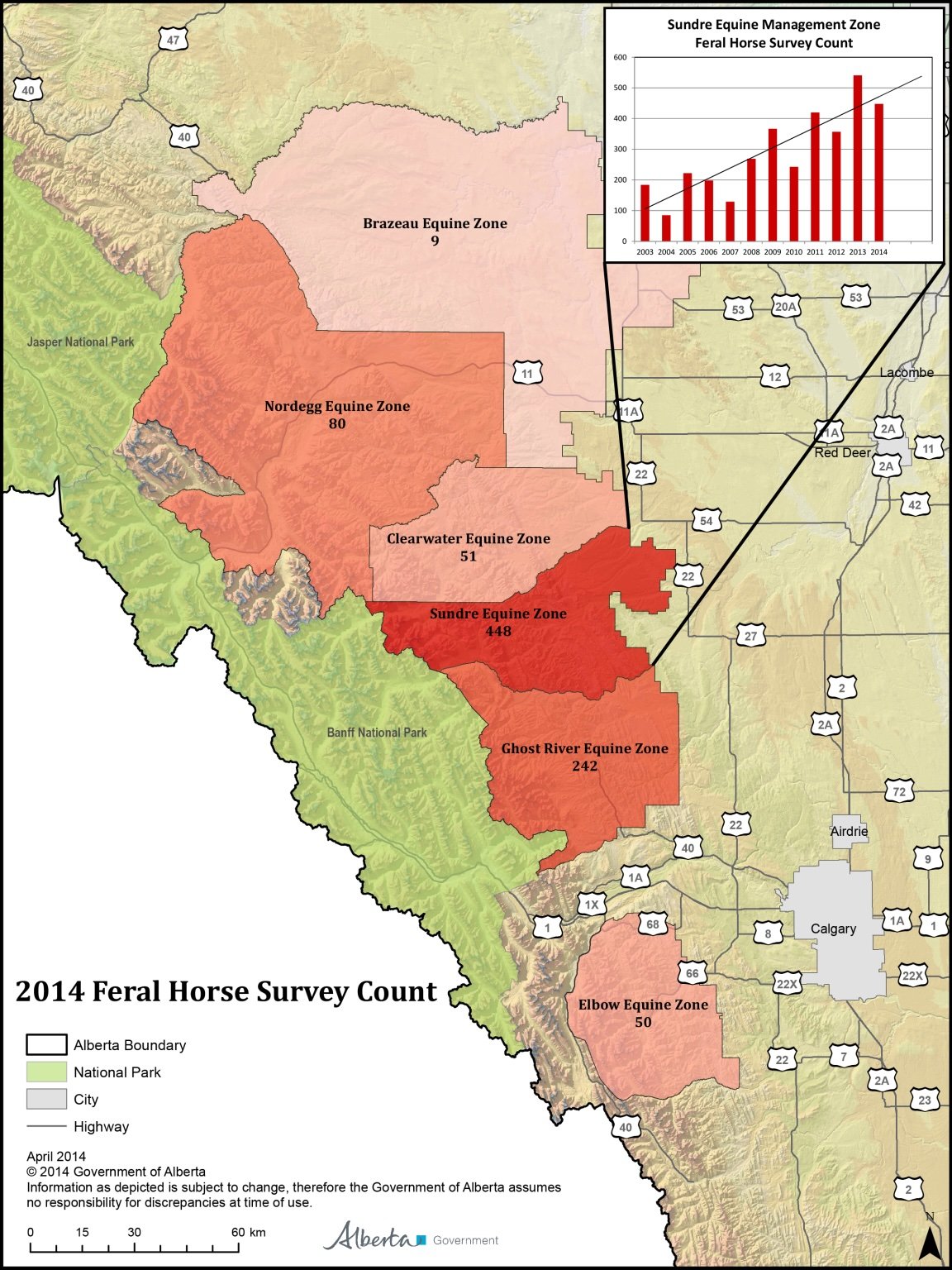
Winter helicopter surveys are conducted every year for zones in the red tier, and every two years for zones in the yellow and green tiers. The Alberta government’s reports are publicly available for review at the following links:
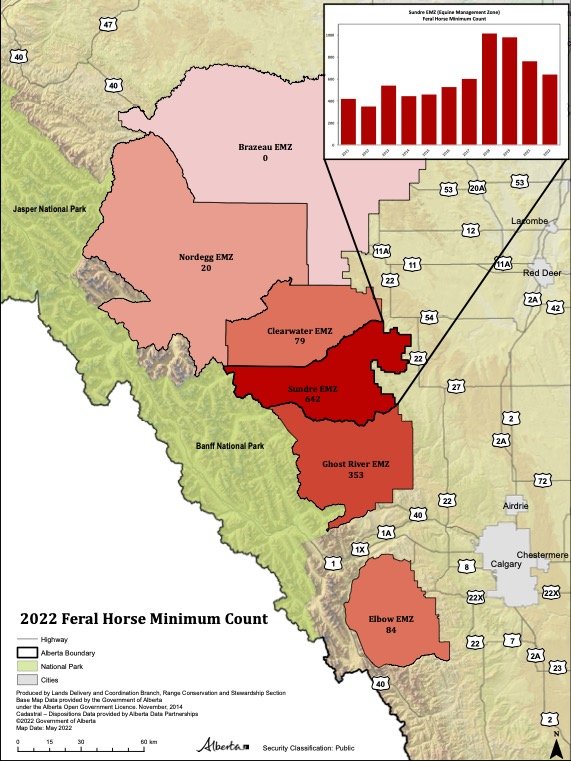
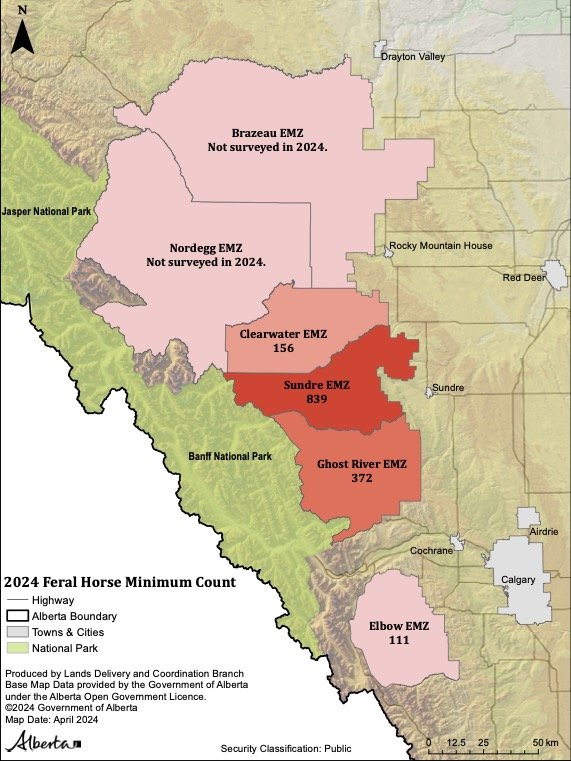
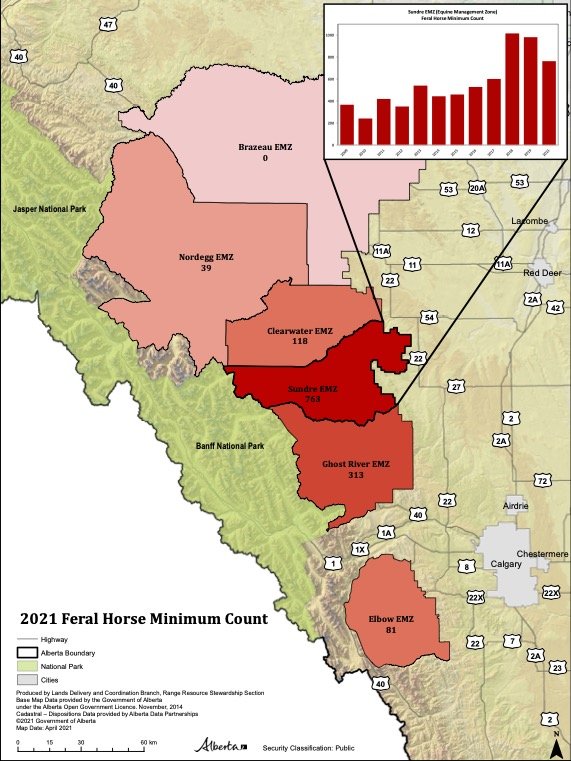
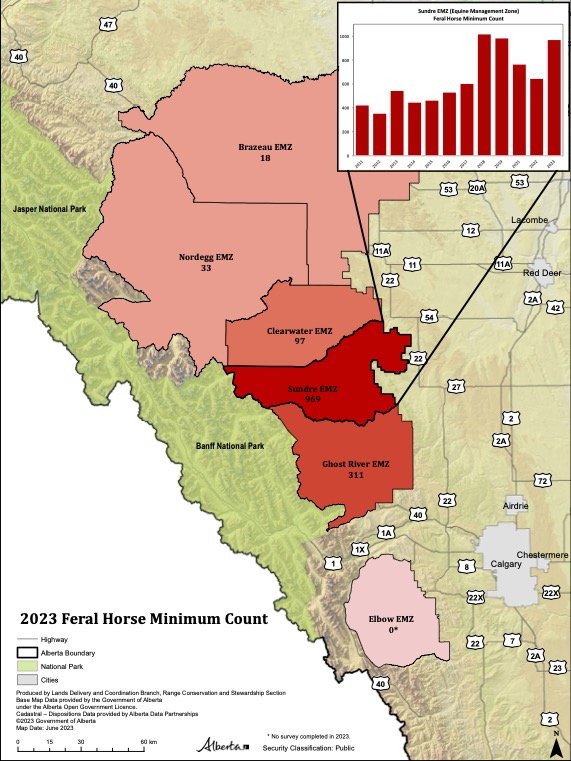
HAWS Horse Counts
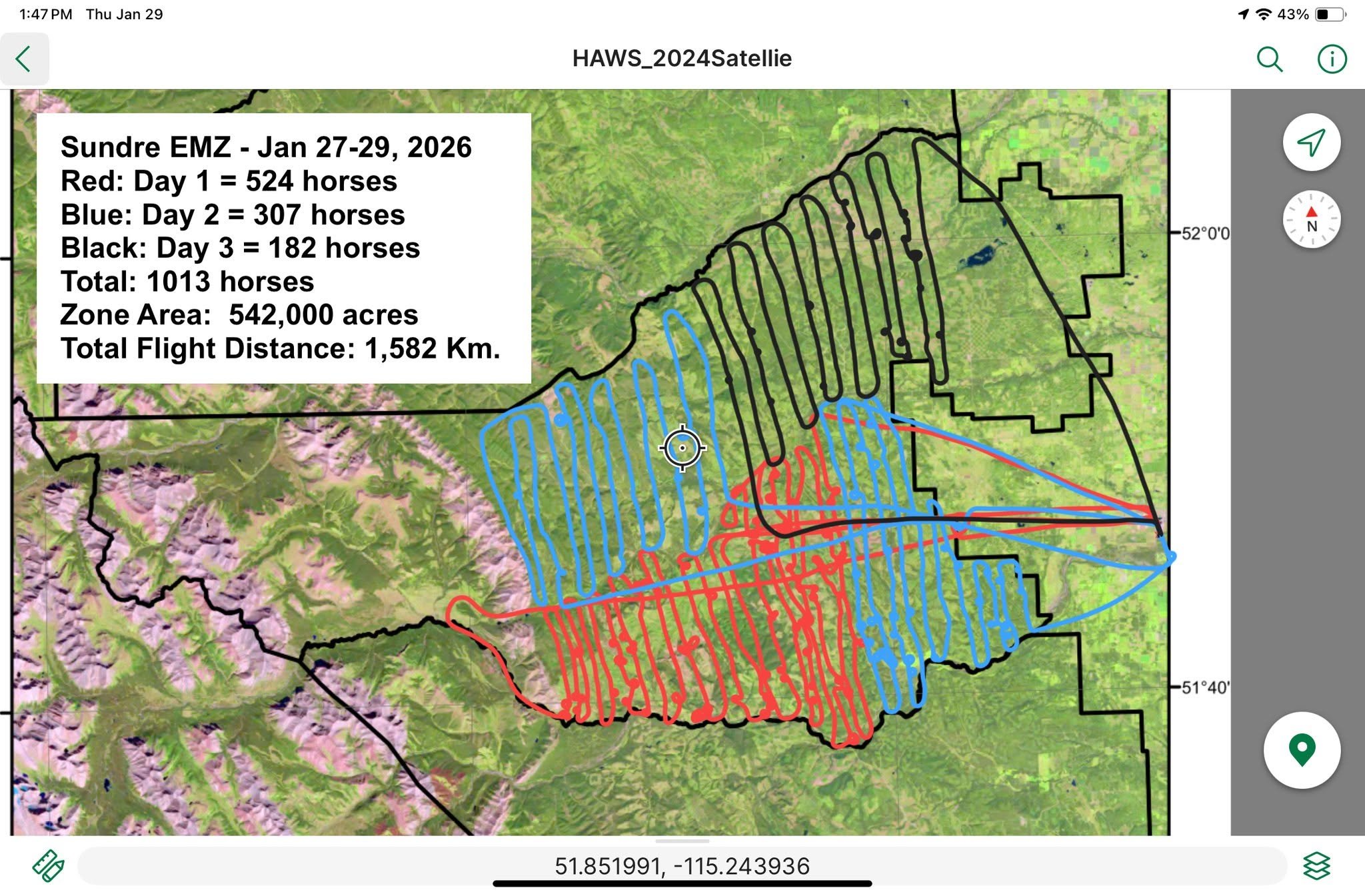
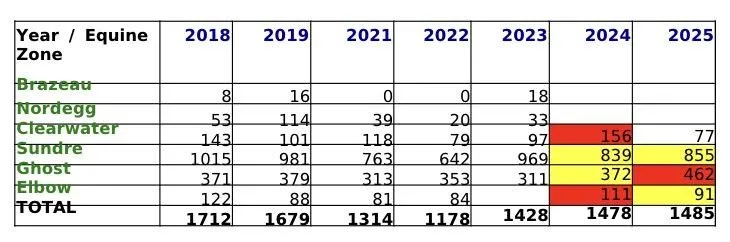
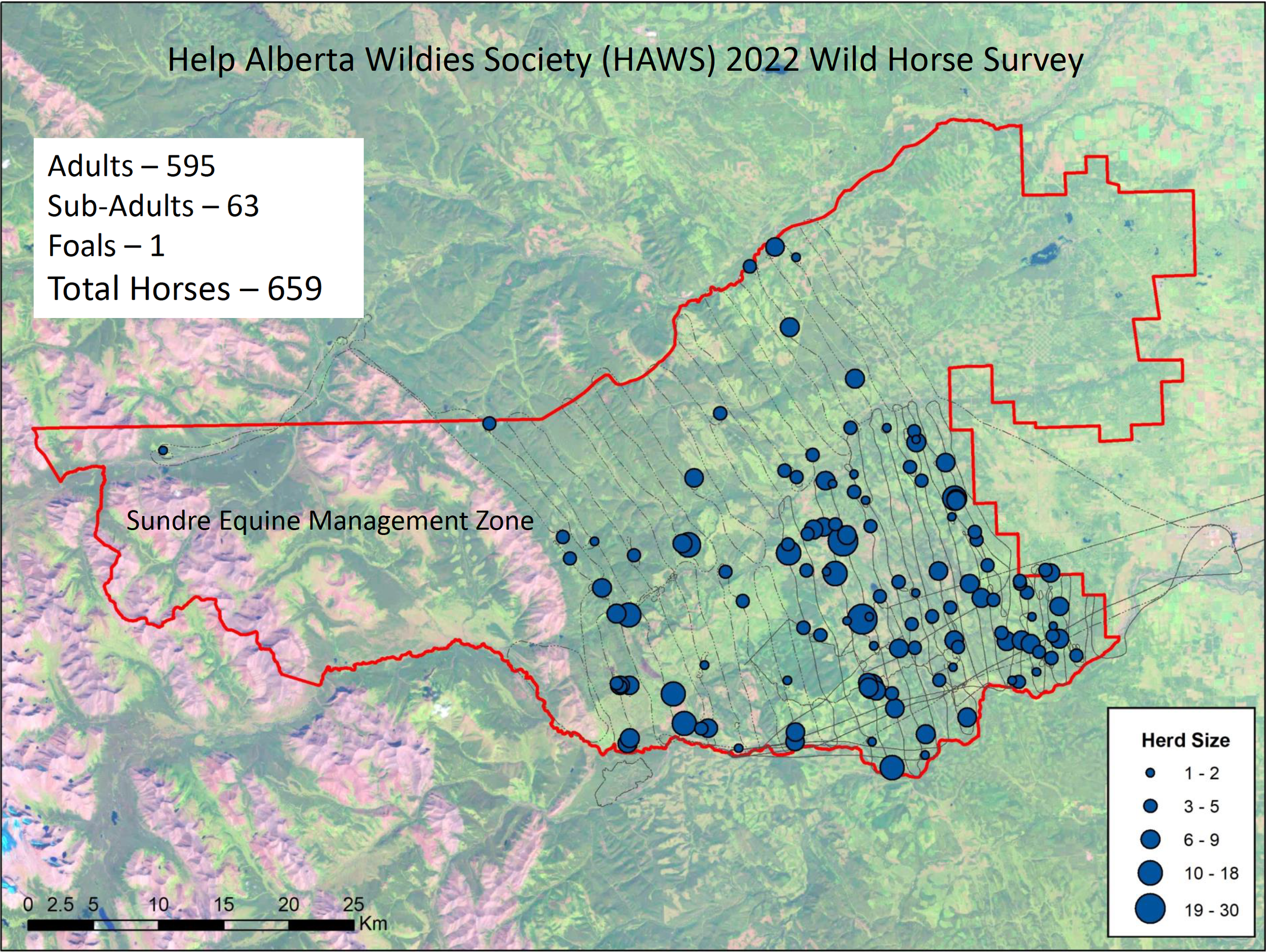
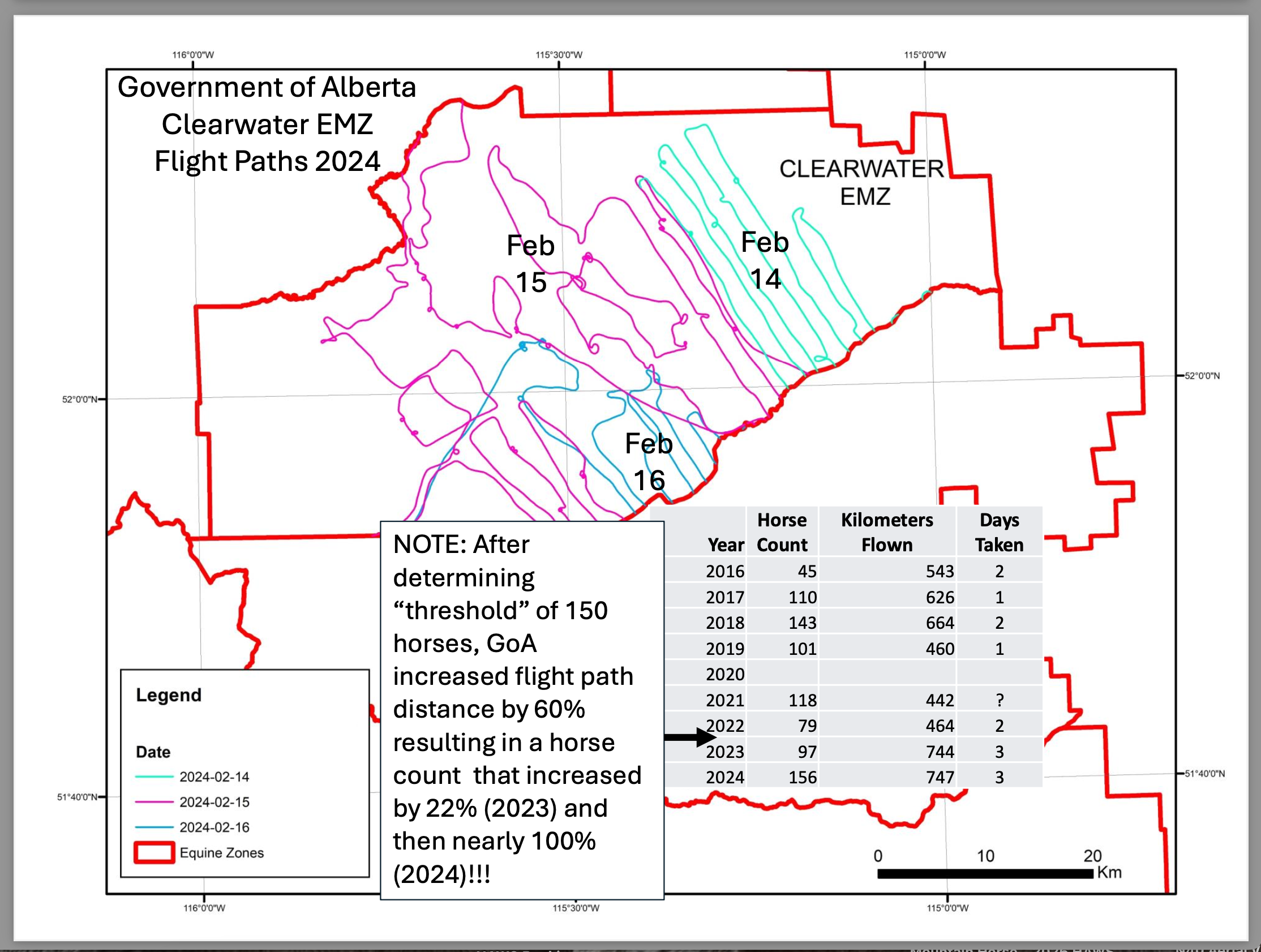
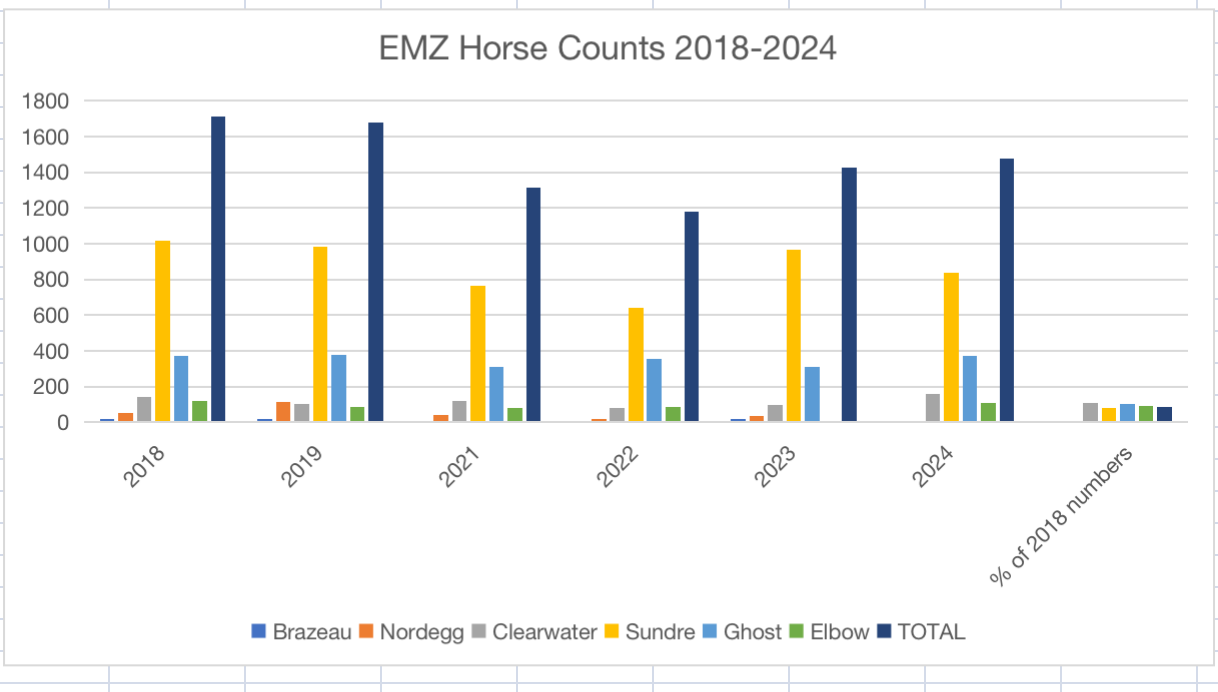
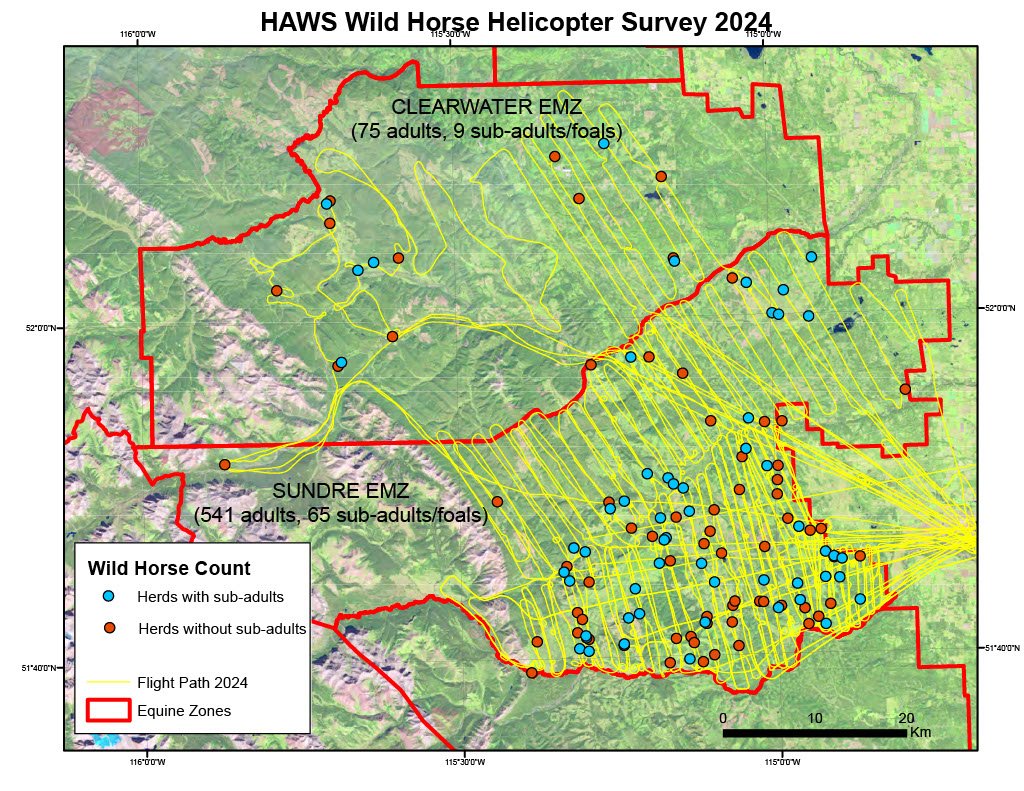
Help Alberta Wildies Society (HAWS) has also documented aerial horse counts by helicopter in several of these zones over the years. The maps and information on this page bring the Alberta government’s published counts together with HAWS counts for comparison. In some cases, the two sources report different numbers, sometimes by a significant margin.
By presenting available counts from both HAWS and the Alberta government, HAWS gives the public an opportunity to examine the data, understand how horse populations have been reported over time, and consider why counts may differ. Our goal is to encourage transparency and informed discussion about how Alberta’s Mountain Horse populations are being monitored and managed.
2023 exposed inconsistencies in data collection methodology
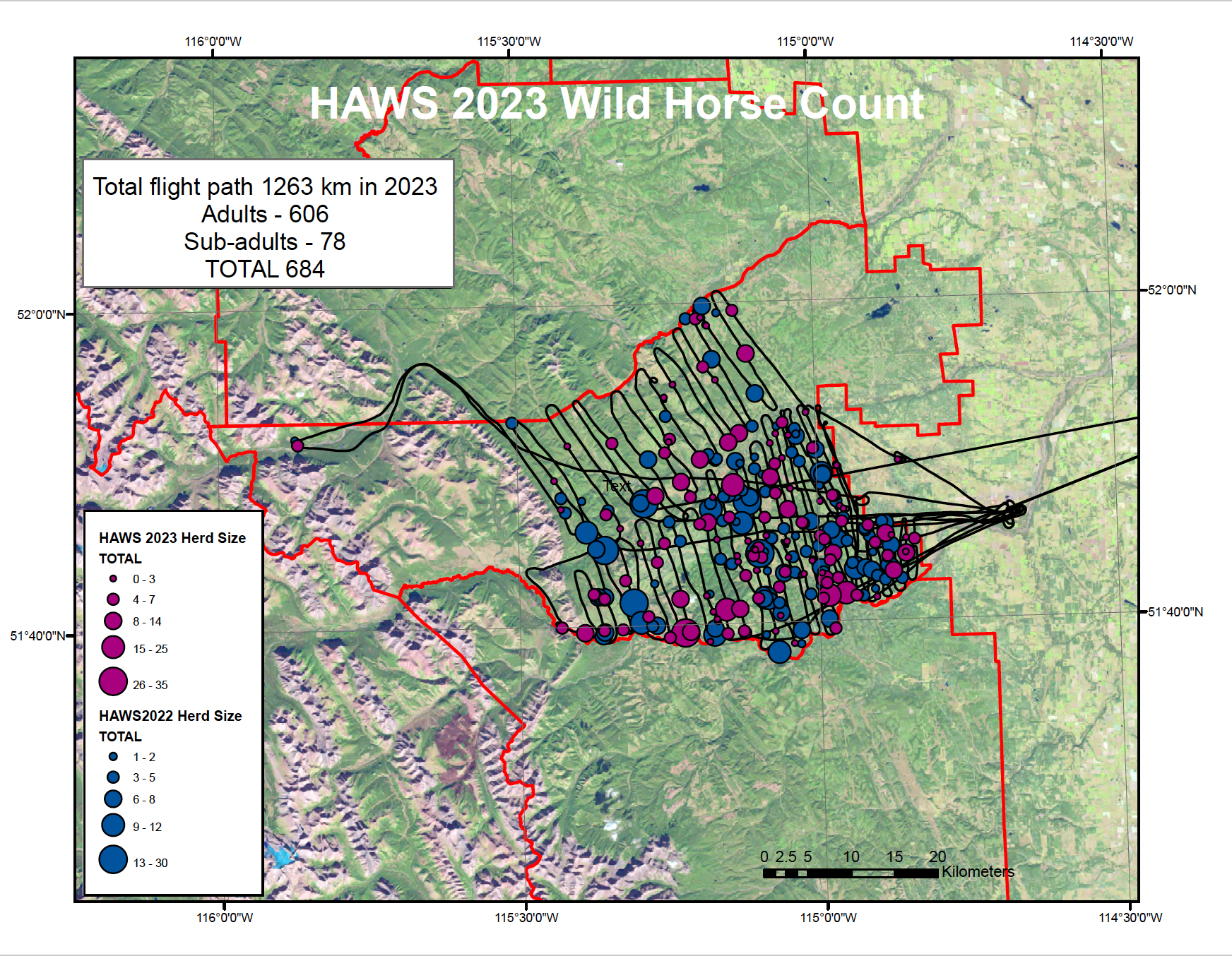
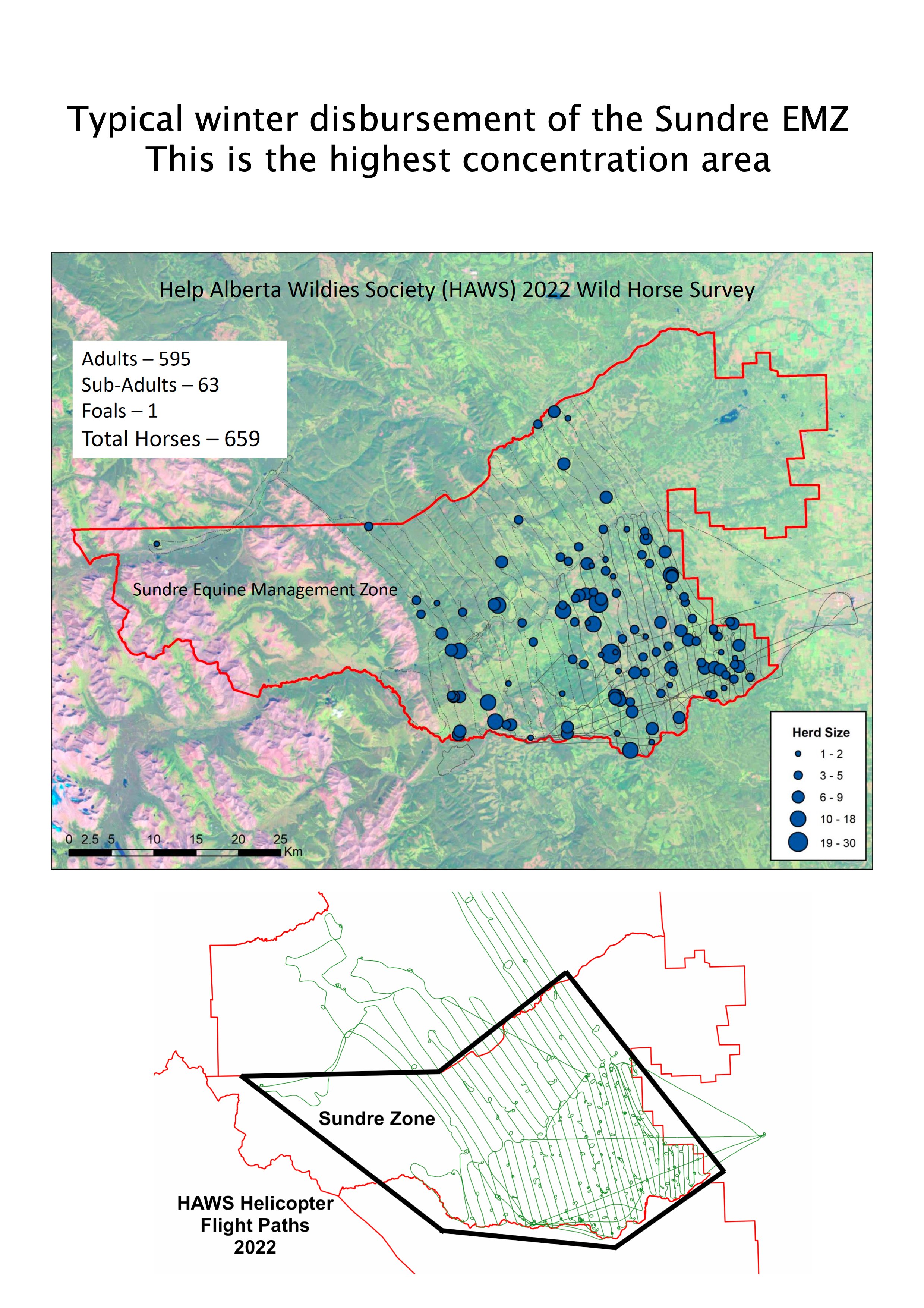
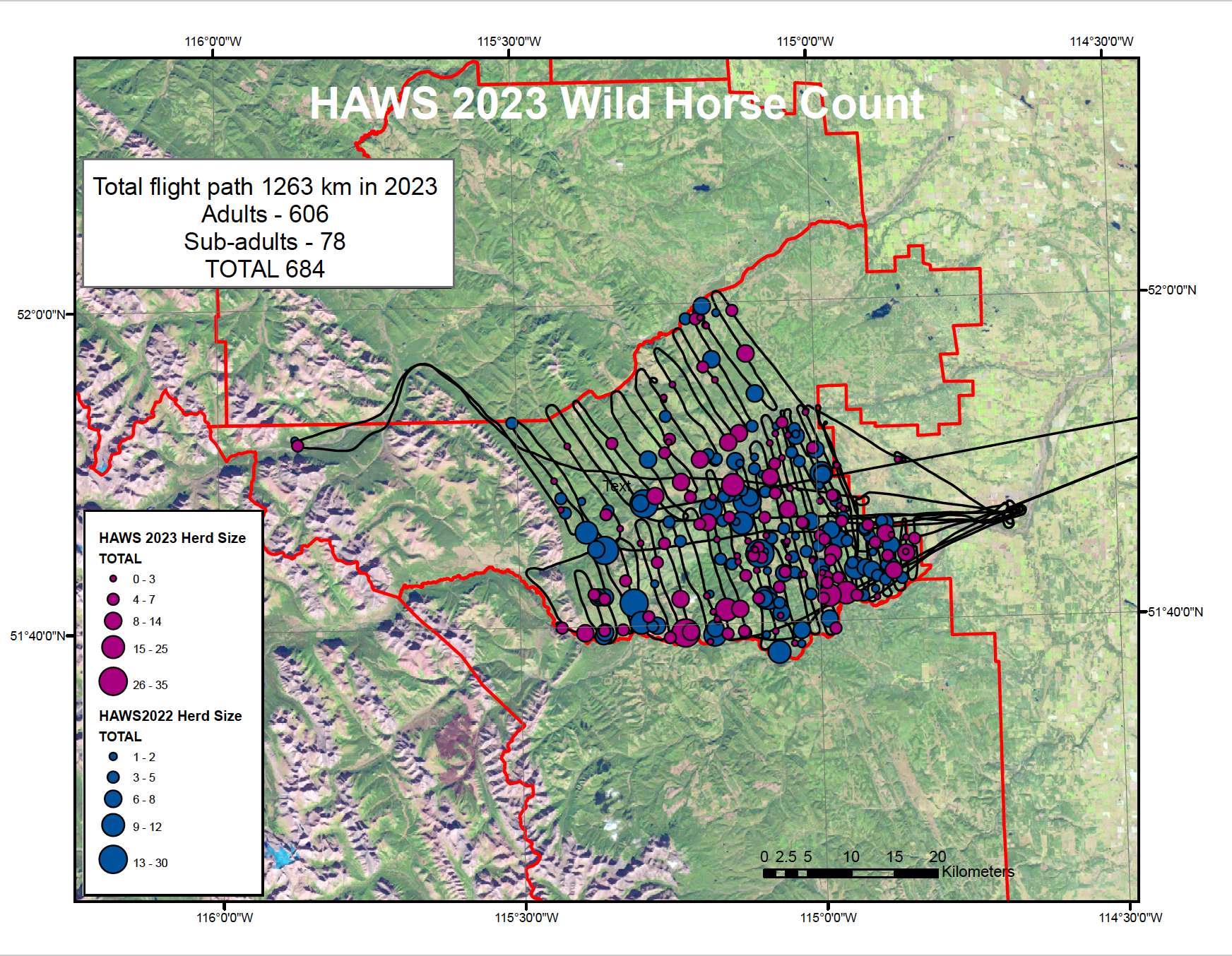
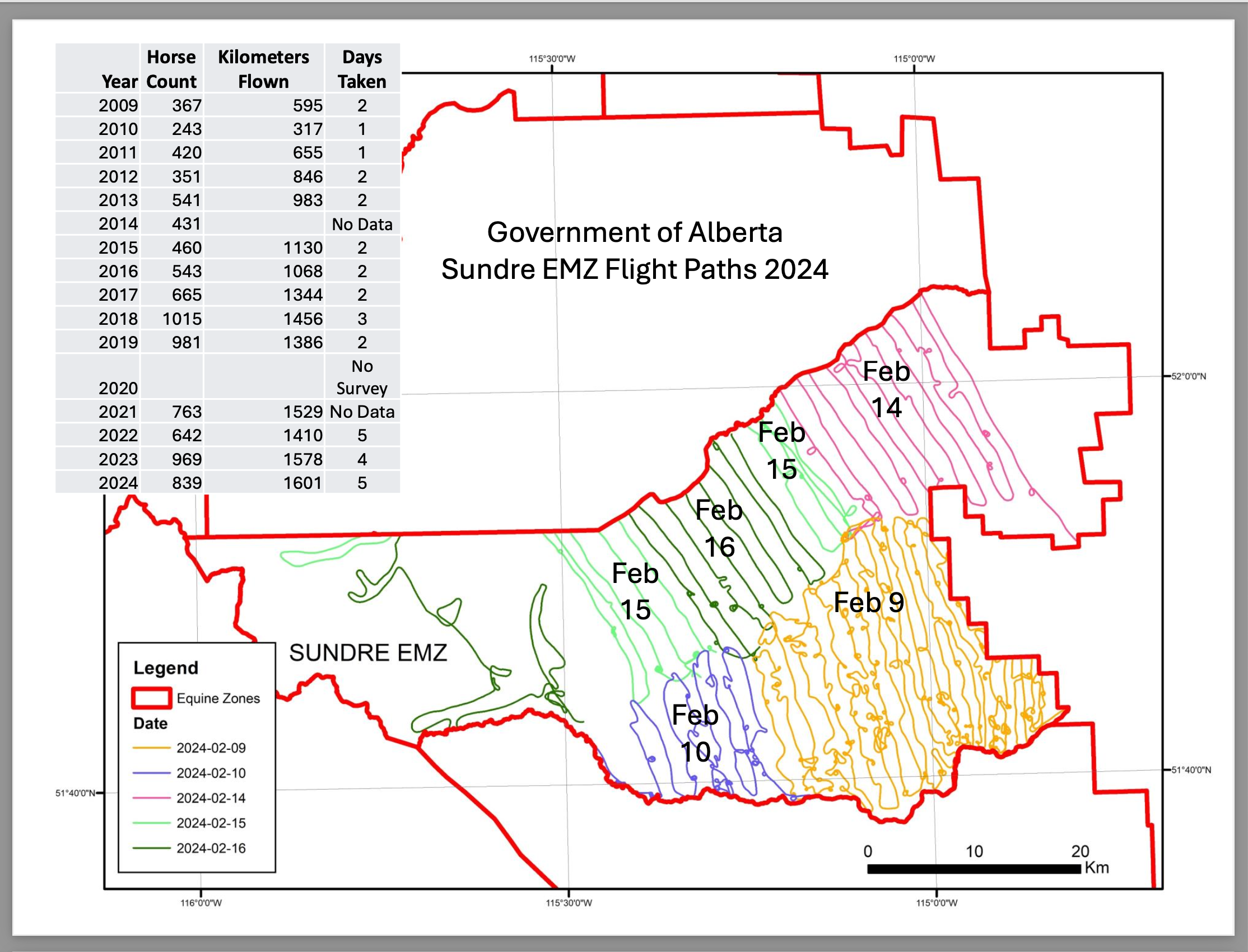
According to HAWS’ 2023 aerial survey 684 horses were counted in the Sundre EMZ — an increase of only 25 horses over the 2022 census of the same geographical area.
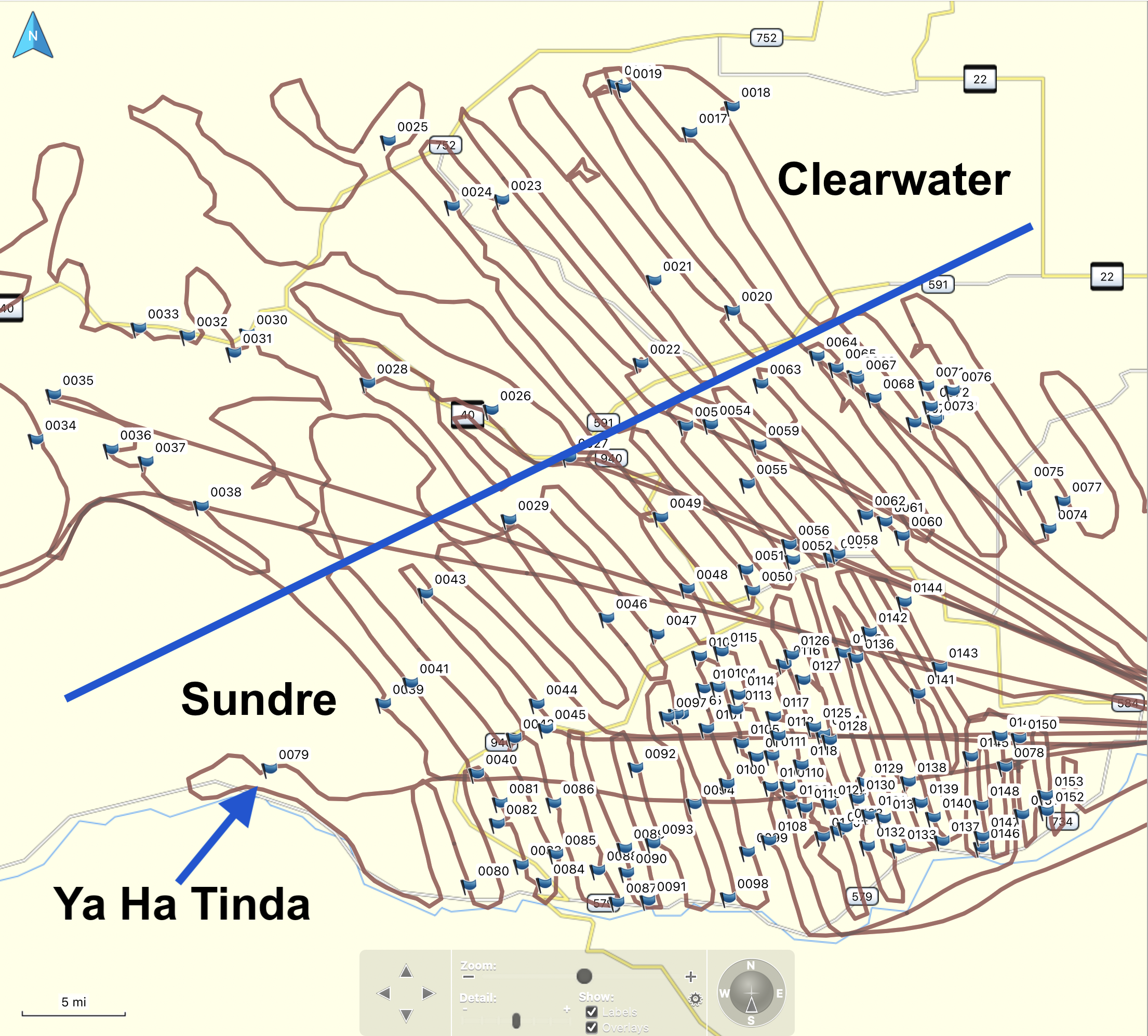
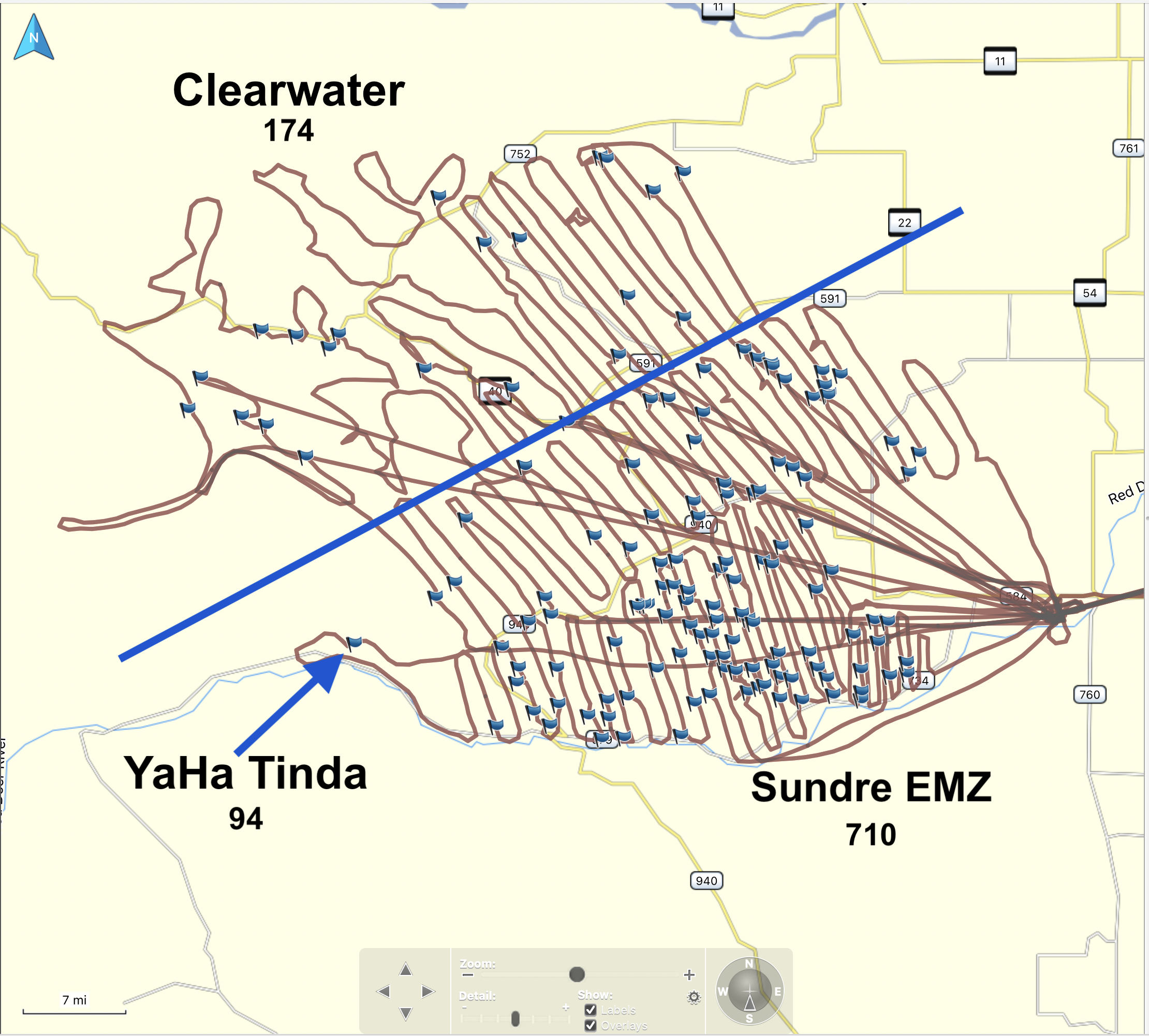
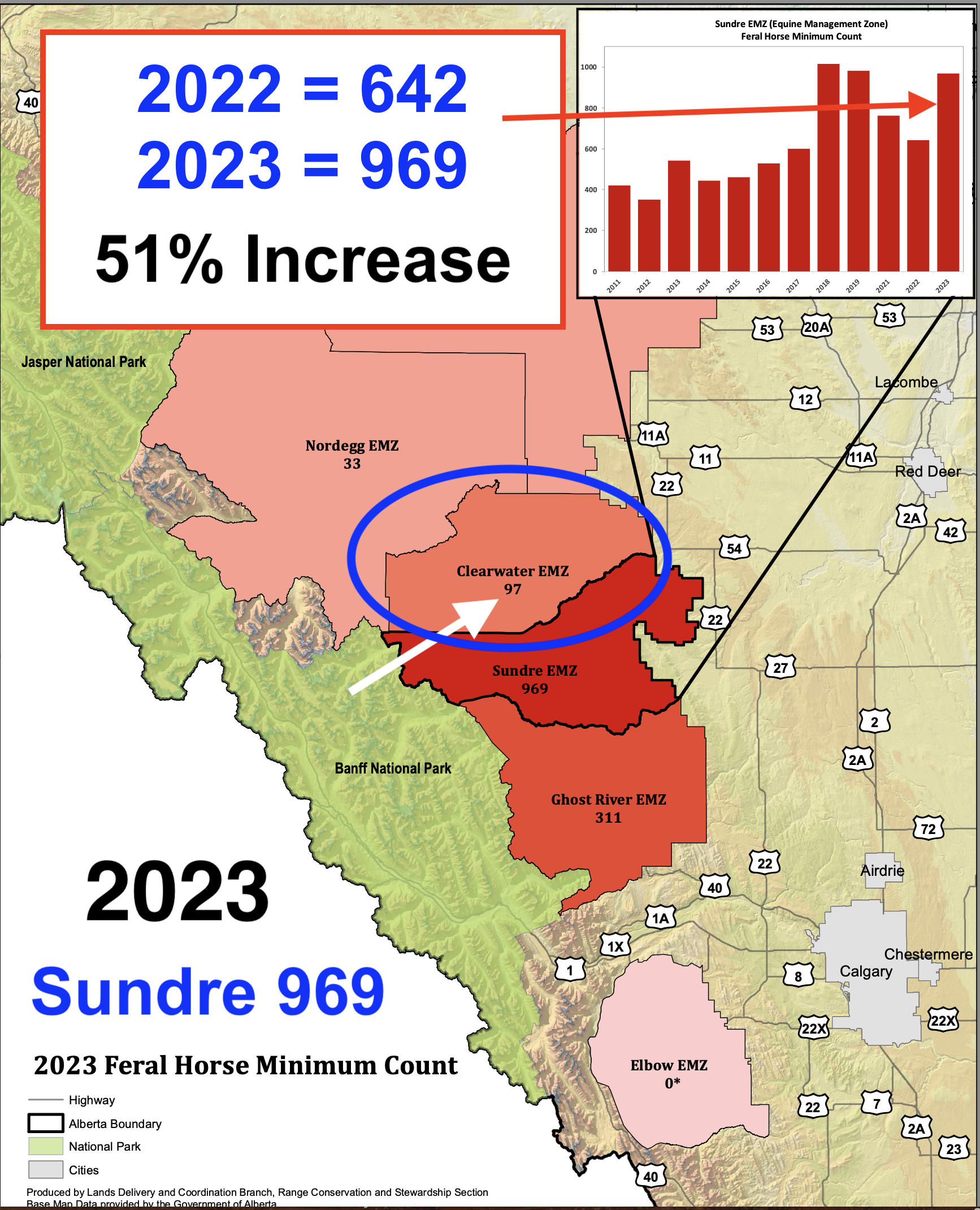
The government reported their 2023 count totalled 969 horses in the Sundre Zone — a 51% increase over its 2022 census. HAWS challenged the government’s 2023 count which made it appear the Alberta Wild horse population was “skyrocketing” when in fact wild horse population counts have been static in the Sundre EMZ since 2018.
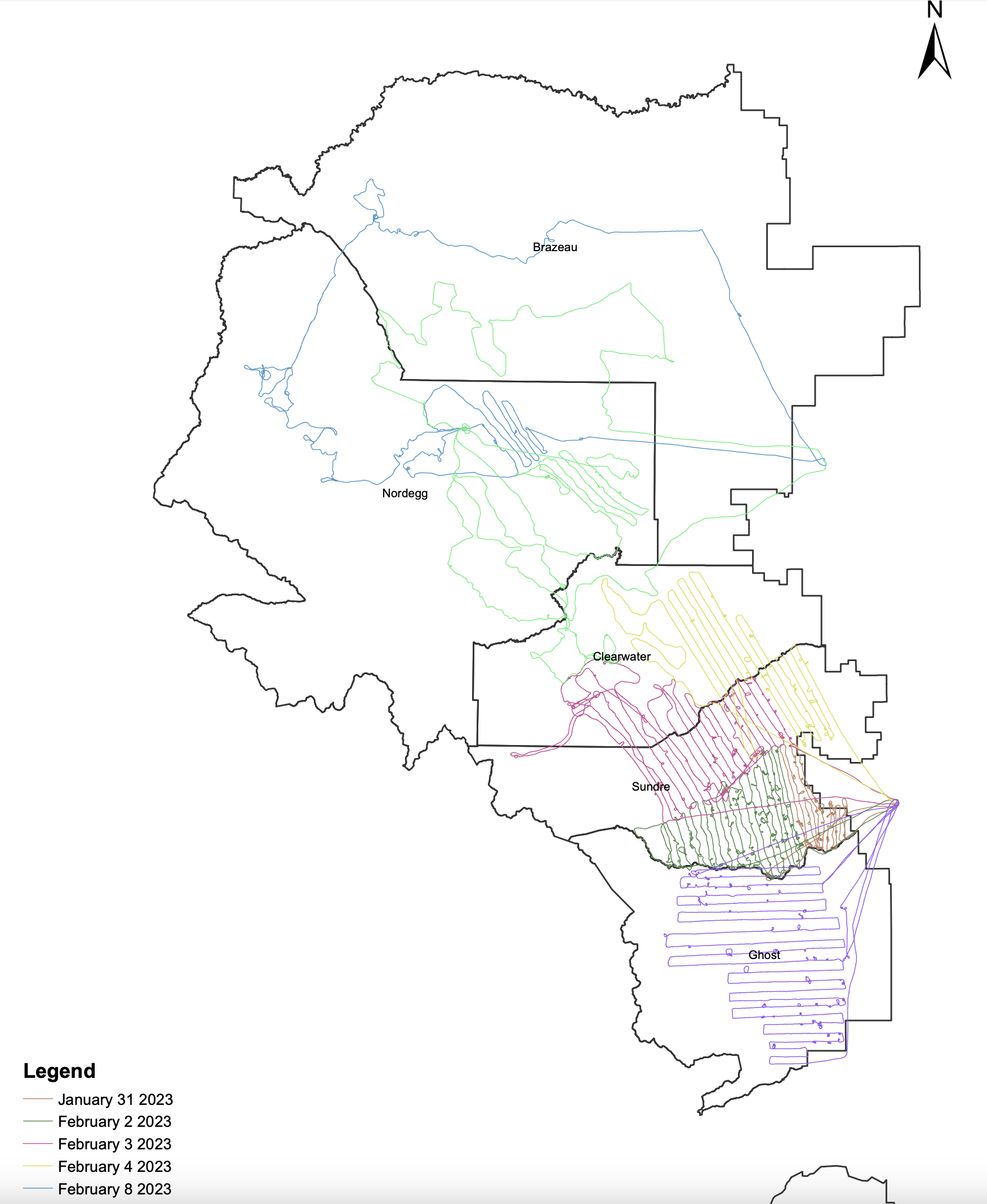
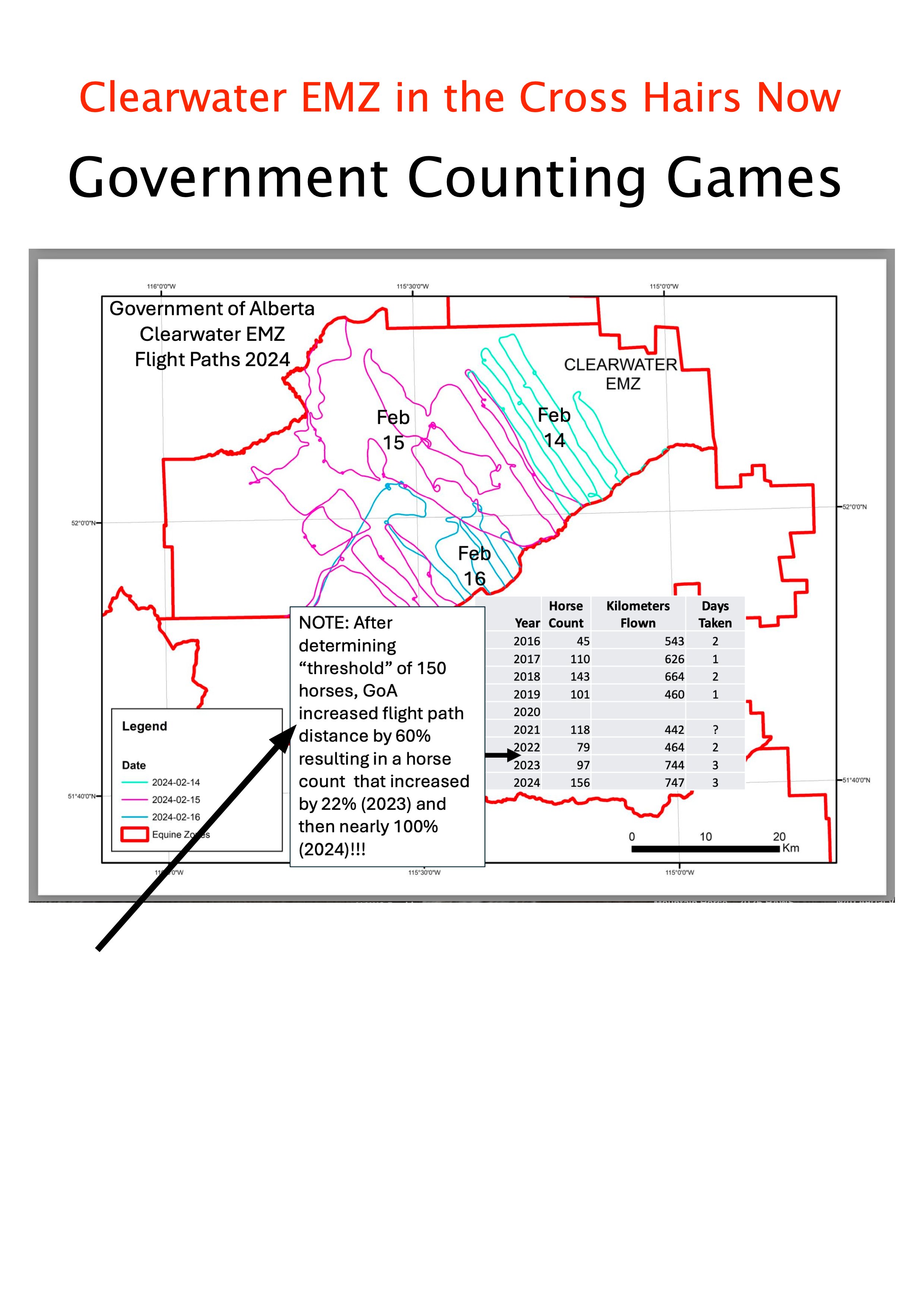
In a meeting on September 28, 2023 between HAWS and Alberta’s Rangeland Office (responsible for the annual wild horse aerial counts), government officials agreed their 2023 wild horse count was inflated given the department flew an undisclosed 500 more kilometers in the Sundre EMZ than in 2022.
As a result of the meeting with HAWS, Rangeland Office officials acknowledged the wild horse population in the Sundre EMZ has remained static since 2018 and henceforth will advise HAWS in advance what flight paths will be flown each year so identical, independent, comparative wild horse population counts can be conducted in the Sundre EMZ. However they refuse to amend their official statistical report that denotes there has been a 51% increase in the wild horse population in the Sundre EMZ.